인생을 바꾼 음악 한편
돈데 보이(Donde Voy). 요즘 뜬금없이 30년 전 드라마 삽입곡이었던 라틴 포크송을 한숨 섞어 흥얼거린다. ‘나는 어디로…


In the world of art, few techniques are as powerful and versatile as juxtaposition. This method involves placing two or more contrasting elements side by side to highlight their differences or create a new, layered meaning. Artists have employed this approach across centuries to provoke thought, evoke emotion, and deepen the viewer’s engagement with their work. Understanding what juxtaposition really means in art can open new doors to appreciating the complexity and ingenuity behind countless masterpieces.
At its core, juxtaposition in art is about contrast. Artists intentionally position disparate elements—such as colors, textures, themes, or even cultural symbols—next to each other. This placement invites viewers to compare and analyze the differences and similarities, often revealing deeper truths or challenging perceptions. For example, a painting might place serene pastoral scenes beside chaotic urban landscapes, prompting reflections on nature versus civilization. This technique is not limited to visual arts; it extends to literature, film, and other creative forms, showcasing its universal significance.
The origins of juxtaposition in art can be traced back to movements like Surrealism and Dada, where artists sought to disrupt conventional expectations and provoke emotional or intellectual responses. By combining unlikely images or ideas—like a melting clock beside a mundane household object—artists challenge viewers to reconsider their assumptions and see the familiar in new, often unsettling ways. Juxtaposition also allows for a layered storytelling approach, where multiple narratives or themes coexist within a single piece, enriching its interpretive depth.
In contemporary art, juxtaposition remains a key tool for innovation. Modern artists experiment with digital media, collage, and mixed techniques, blending contrasting elements to forge new visual languages. This technique helps convey complex ideas about identity, politics, and society, making the viewer an active participant in deciphering meaning. Thus, juxtaposition continues to evolve as a fundamental device that both challenges and enriches our understanding of art and the world around us.
Juxtaposition significantly influences how audiences interpret and emotionally respond to artwork. When contrasting elements are placed together, they often generate surprise or discomfort, which can lead to a more profound emotional connection. For instance, placing symbols of innocence alongside disturbing imagery can evoke feelings of conflict or empathy. This emotional tension compels viewers to engage more deeply, encouraging reflection on the underlying messages or societal issues being addressed.
Furthermore, juxtaposition can serve as a visual metaphor, imbuing artworks with layered meanings. An artist might contrast light and dark to symbolize good versus evil, or wealth and poverty to critique social inequality. These visual contrasts help communicate complex ideas succinctly and powerfully, often resonating on a subconscious level. The emotional impact is amplified when viewers recognize the clever or provocative use of contrast, making the artwork memorable and thought-provoking.
In addition to provoking emotion and meaning, juxtaposition can also challenge viewers’ perceptions and biases. By presenting contrasting images or ideas side by side, artists invite viewers to question their assumptions and see different perspectives. This can foster empathy and understanding, especially when confronting social or political issues. Ultimately, juxtaposition in art is a dynamic tool that not only enhances aesthetic appeal but also amplifies the emotional and intellectual engagement between the artwork and its audience, making it a vital element of meaningful artistic expression.
In summary, juxtaposition is more than just a compositional technique; it’s a powerful means of communication in art. By intentionally placing contrasting elements together, artists can evoke emotion, deepen meaning, and challenge viewers to see the world in new ways. Whether subtle or stark, juxtaposition continues to be a vital approach that enriches artistic storytelling and invites us into a more nuanced understanding of human experience.
예술의 세계에서 **병치(Juxtaposition)**만큼 강력하고 다재다능한 기법은 거의 없습니다. 이 방법은 둘 이상의 대조적인 요소를 나란히 배치하여 그 차이를 강조하거나 새롭고 다층적인 의미를 창조합니다. 예술가들은 수세기 동안 이 접근 방식을 사용하여 생각을 자극하고, 감정을 불러일으키며, 작품에 대한 관람자의 몰입도를 높여왔습니다. 병치가 예술에서 진정으로 무엇을 의미하는지 이해하는 것은 수많은 걸작 뒤에 숨겨진 복잡성과 독창성을 감상하는 새로운 문을 열어줄 수 있습니다.
본질적으로 예술에서의 병치는 대비에 관한 것입니다. 예술가들은 의도적으로 색상, 질감, 주제 또는 심지어 문화적 상징과 같은 이질적인 요소들을 나란히 배치합니다. 이러한 배치는 관람자들이 차이점과 유사점을 비교하고 분석하도록 유도하며, 종종 더 깊은 진실을 드러내거나 인식을 바꾸게 합니다. 예를 들어, 그림은 고요한 전원 풍경을 혼란스러운 도시 풍경 옆에 배치하여 자연과 문명에 대한 성찰을 유도할 수 있습니다. 이 기법은 시각 예술에만 국한되지 않고 문학, 영화 및 기타 창의적인 형태에도 확장되어 보편적인 중요성을 보여줍니다.
예술에서 병치의 기원은 **초현실주의(Surrealism)**와 **다다이즘(Dada)**과 같은 운동으로 거슬러 올라갈 수 있으며, 이 운동의 예술가들은 전통적인 기대치를 깨고 감정적 또는 지적 반응을 유도하고자 했습니다. 녹아내리는 시계를 평범한 가정용품 옆에 놓는 등 있을 법하지 않은 이미지나 아이디어를 결합함으로써 예술가들은 관람자들이 자신의 가정을 재고하고 익숙한 것을 새롭고 종종 불안한 방식으로 보도록 도전합니다. 병치는 또한 여러 서술이나 주제가 단일 작품 내에 공존하여 해석적 깊이를 풍부하게 하는 계층적인 스토리텔링 접근 방식을 가능하게 합니다.
현대 미술에서 병치는 혁신을 위한 핵심 도구로 남아 있습니다. 현대 예술가들은 디지털 미디어, 콜라주 및 혼합 기법을 실험하며, 대조되는 요소를 혼합하여 새로운 시각 언어를 만들어냅니다. 이 기법은 정체성, 정치 및 사회에 대한 복잡한 아이디어를 전달하는 데 도움이 되며, 관람자를 의미를 해독하는 데 적극적인 참여자로 만듭니다. 따라서 병치는 예술과 그 주변 세계에 대한 우리의 이해를 도전하고 풍부하게 하는 근본적인 장치로 계속 발전하고 있습니다.
병치는 관객이 작품을 해석하고 정서적으로 반응하는 방식에 큰 영향을 미칩니다. 대조되는 요소들이 함께 배치될 때, 종종 놀라움이나 불편함을 유발하여 더 깊은 정서적 연결로 이어질 수 있습니다. 예를 들어, 순수함을 상징하는 것들을 혼란스러운 이미지 옆에 배치하면 갈등이나 공감의 감정을 불러일으킬 수 있습니다. 이러한 정서적 긴장은 관람자들이 더 깊이 몰입하게 하여 기저에 깔린 메시지나 다루고 있는 사회적 문제에 대한 성찰을 장려합니다.
더 나아가, 병치는 시각적 은유 역할을 하여 작품에 여러 층의 의미를 부여할 수 있습니다. 예술가는 빛과 어둠을 대조하여 선과 악을 상징하거나, 부와 빈곤을 대조하여 사회적 불평등을 비판할 수 있습니다. 이러한 시각적 대비는 복잡한 아이디어를 간결하고 강력하게 전달하는 데 도움이 되며, 종종 잠재의식적인 수준에서 공명합니다. 관람자들이 대비의 영리하거나 도발적인 사용을 인식할 때 정서적 영향은 증폭되어 작품을 기억에 남고 생각을 자극하는 것으로 만듭니다.
감정과 의미를 자극하는 것 외에도, 병치는 관람자들의 인식과 편견에 도전할 수도 있습니다. 대조적인 이미지나 아이디어를 나란히 제시함으로써 예술가들은 관람자들이 자신의 가정을 질문하고 다른 관점을 보도록 유도합니다. 이것은 특히 사회적 또는 정치적 문제를 다룰 때 공감과 이해를 촉진할 수 있습니다. 궁극적으로 예술에서의 병치는 미적 매력을 향상시킬 뿐만 아니라 작품과 관객 간의 정서적, 지적 참여를 증폭시키는 역동적인 도구이며, 의미 있는 예술적 표현의 필수적인 요소입니다.
요약하자면, 병치는 단순한 구성 기법 이상입니다. 그것은 예술에서 강력한 의사소통 수단입니다. 대조적인 요소들을 의도적으로 함께 배치함으로써 예술가들은 감정을 불러일으키고, 의미를 심화시키며, 관람자들이 세상을 새로운 방식으로 보도록 도전할 수 있습니다. 미묘하든 극명하든, 병치는 예술적 스토리텔링을 풍부하게 하고 인간 경험에 대한 보다 미묘한 이해로 우리를 초대하는 중요한 접근 방식입니다.
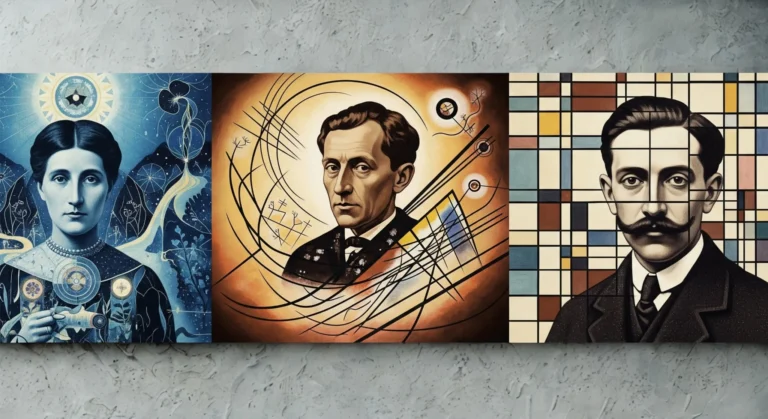
신지학은 추상미술의 탄생에 깊은 영감을 주며, 클린트의 “10대연작”과 칸딘스키, 몬드리안의 주요 작품에 보이지 않는 세계와 영혼의 진화를 예술로 번역하는 토대를 제공했다.

에바 헤세의 독창적 작업은 현대예술의 경계를 넓혔다.

라캉의 주이상스는 현대 예술의 창조성과 표현 방식을 새롭게 정의하였다.